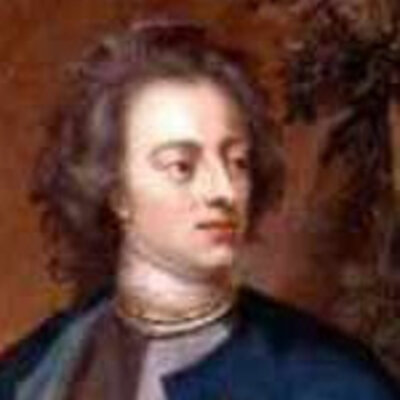
Sweden Karl Xii Von Holstein-Gottorp King Of
мужской, родился 17.06.1682, Stockholm, Stockholm, Sweden
умер 30.11.1718, Halden, Østfold, Norway
FamilySearch Family Tree | Carl XII von Holstein-Gottorp, King of Sweden | Имена при рождении: Charles XII Of SwedenKarl den TolvteKarl von Zweibruecken, XIIKarl XiiKarl XII King Of SwedenKarl XII Von Simmern, King Of SwedenKarl XII von ZweibrueckenCharles XII King Of Sweden | Прозвище: Carolus Rex | Пол: мужчина | Рождение: 17 июн 1682 - Stockholm, Stockholm, Sweden | Крещение: 12 июл 1682 - Stockholm, Stockholm, Sweden | Военная служба: The Great Northern War - авг 1700 - Central Europe, Europe | Военная служба: Invaded Norway - 1716 - Norway | Смерть: 30 ноя 1718 - Halden, Østfold, Norway | Захоронение: 26 фев 1719 - Riddarholm Church, Stockholm, Sweden | Занятие: konge | Дворянский титул: Coronation - 14 дек 1697 - Stockholm, Sweden | Родители: Carl XI von Zweibrücken, King of Sweden, Queen Ulrica Eleanor Sweden (av Oldenburg Danmark) | Родные брат/сестра: Henrik Sigismund KarlSon Aschenborn, Helena Christina Aspgren (Aschenborn), Hedwig Sophie von von Schleswig-Holstein-Gottorp (Zweibrücken), Gustav Von Simmern Prince Of Sweden, Ulrich Von Simmern, Prince Of Sweden, Friedrich Von Simmern, Prince Of Sweden, Karl Gustav Von Simmern, Prince Of Sweden, Ulrike Eleonore von of Sweden Queen Of Sweden (Holstein-Gottorp) | Дополнительная информация: | | LifeSketch: So just as a heads up a bunch of this i copied from other sites just because they had more professional grammar. I tagged them in the sources. Charles XII, sometimes Carl XII Swedish: Karl XII or Carolus Rex was King of Sweden (including current Finland) from 1697 to 1718. He belonged to the House of Palatinate-Zweibrücken, a branch line of the House of Wittelsbach. Charles was the only surviving son of Charles XI and Ulrika Eleonora the Elder. He assumed power, after a seven-month caretaker government, at the age of fifteen. Charles, like all kings, was styled by a royal title, which combined all his titles into one single phrase. This was: We Charles, by the Grace of God King of Sweden, the Goths and the Vends, Grand Duke of Finland, Duke of Scania, Estonia, Livonia and Karelia, Lord of Ingria, Duke of Bremen, Verden and Pomerania, Prince of Rügen and Lord of Wismar, and also Count Palatine by the Rhine, Duke in Bavaria, Count of Zweibrücken–Kleeburg, as well as Duke of Jülich, Cleve and Berg, Count of Veldenz, Spanheim and Ravensberg and Lord of Ravenstein.[5] The fact that Charles was crowned as Charles XII does not mean that he was the 12th king of Sweden by that name. Swedish kings Erik XIV (1560–1568) and Charles IX (1604–1611) gave themselves numerals after studying a mythological history of Sweden. He was actually the 6th King Charles. Charles was an exceptionally skilled military leader and tactician as well as an able politician, credited with introducing important tax and legal reforms. As for his famous reluctance towards peace efforts, he is quoted by Voltaire as saying upon the outbreak of the war; «I have resolved never to start an unjust war but never to end a legitimate one except by defeating my enemies». With the war consuming more than half his life and nearly all his reign, He was succeeded by his sister Ulrika Eleonora, who in turn was coerced to hand over all substantial powers to the Riksdag of the Estates and opted to surrender the throne to her husband, who became King Frederick I of Sweden. In 1700, a triple alliance of Denmark–Norway, Saxony–Poland–Lithuania and Russia launched a threefold attack on the Swedish protectorate of Holstein-Gottorp and provinces of Livonia and Ingria, aiming to draw advantage as the Swedish Empire was unaligned and ruled by a young and inexperienced king, thus initiating the Great Northern War. Leading the Swedish army against the alliance, Charles won multiple victories despite being usually significantly outnumbered. A major victory over a Russian army some three times the size in 1700, at the Battle of Narva, compelled Peter the Great to sue for peace, an offer that Charles subsequently rejected. By 1706, Charles, now 24 years old, had forced all of his foes into submission including, in that year, a decisively devastating victory by Swedish forces under general Carl Gustav Rehnskiöld over a combined army of Saxony and Russia at the Battle of Fraustadt. Russia was now the sole remaining hostile power. Charles\'s subsequent march on Moscow met with initial success as victory followed victory, the most significant of which was the Battle of Holowczyn where the smaller Swedish army routed a Russian army twice the size. The campaign ended with disaster when the Swedish army suffered heavy losses to a Russian force more than twice its size at Poltava. Charles had been incapacitated by a wound prior to the battle, rendering him unable to take command. The defeat was followed by the Surrender at Perevolochna. Charles spent the following years in exile in the Ottoman Empire before returning to lead an assault on Norway, trying to evict the Danish king from the war once more in order to aim all his forces at the Russians. Two campaigns met with frustration and ultimate failure, concluding with his death at the Siege of Fredriksten in 1718. At the time, most of the Swedish Empire was under foreign military occupation, though Sweden itself was still free. This situation was later formalized, albeit moderated in the subsequent Treaty of Nystad. The result was the end of the Swedish Empire, and also of its effectively organized absolute monarchy and war machine, commencing a parliamentary government unique for continental Europe, which would last for half a century until royal autocracy was restored by Gustav III. Charles never married and fathered no children of whom historians are aware. In his youth, he was particularly encouraged to find a suitable spouse in order to secure the succession, but he would frequently avoid the subject of sex and marriage. Possible candidates included Princess Sophia Hedwig of Denmark, Louisa Maria Stuart and Princess Maria Elisabeth of Holstein-Gottorp – but of the latter he pleaded that he could never wed someone «as ugly as Satan and with such a devilish big mouth».Instead, he made it clear that he would marry only someone of his own choice, and for love rather than dynastic pressures. His lack of mistresses may have been due to a strong religious faith. Charles\'s first campaign was against Denmark–Norway, ruled by his cousin Frederick IV of Denmark. For this campaign Charles secured the support of England and the Netherlands, both maritime powers concerned with Denmark\'s threats too close to the Sound. Leading a force of 8,000 and 43 ships in an invasion of Zealand, Charles rapidly compelled the Danes to submit to the Peace of Travendal in August 1700, which indemnified Holstein. Having forced Denmark–Norway to make peace within months, King Charles turned his attention upon the two other powerful neighbors, King August II (cousin to both Charles XII and Frederick IV of Denmark–Norway) and Peter the Great of Russia, who also had entered the war against him, ironically on the same day that Denmark came to terms. Russia had opened their part of the war by invading the Swedish-held territories of Livonia and Estonia. Charles countered this by attacking the Russian besiegers at the Battle of Narva The Russians outnumbered the Swedish army of ten thousand men by almost four to one. Charles attacked under cover of a blizzard, effectively split the Russian army in two and won the battle. While Charles won several decisive battles and ultimately secured the coronation of his ally Stanisław Leszczyński and the surrender of Saxony, Charles planned an invasion of the Russian heartland, allying himself with Ivan Mazepa, Hetman of the Ukrainian Cossacks. Charles left the homeland with a defense force of approximately 28,800 men, with a further 14,000 in Swedish Finland, as well as other garrisons in the Baltic and German provinces. After securing his favorite victory in the Battle of Holowczyn, despite being outnumbered over three to one by the new Russian army, Charles opted to march eastwards on Moscow rather than try to seize Saint Petersburg, founded from the Swedish town of Nyenskans five years earlier. Peter the Great managed, however, to ambush Lewenhaupt\'s army at Lesnaya before Charles could combine his forces, thus losing valuable supplies. By the time of the decisive Battle of Poltava, in July 1709, Charles had been wounded.The king was incapacitated by a coma resulting from his injuries and was unable to lead the Swedish forces. His general Carl Gustav Rehnskiöld had a clearly inferior force to face the fortified and modernized army of Tsar Peter. The Swedish assault ended in disaster, and the king fled south to the Ottoman Empire with a small entourage, and set up camp at Bender with some 1,000 of his Caroleans (Karoliner in Swedish). The remainder of the army surrendered days later at Perevolochna. During his five-year stay in the Ottoman Empire, Charles XII corresponded with his sister Ulrika Eleonora. According to Mrs. Ragnhild Marie Hatton, a Norwegian-British historian, in some of those letters Charles expressed his desire for a peace treaty which would be defensible in the future Swedish generations\' eyes. However, he emphasized that only a greater respect for Sweden in Europe would enable him to achieve such a peace treaty. In 1718, Charles invaded Norway. With a main force of 40,000 men, he again laid siege to the fortress of Fredriksten overlooking the town of Fredrikshald. Charles was shot in the head and killed during the siege, while he was inspecting trenches. The invasion was abandoned, and Charles\' body was returned to Sweden. A second force, under Carl Gustaf Armfeldt, marched against Trondheim but was forced to retreat. In the march that ensued, many of the 5,800 remaining men perished in a severe winter storm. Exceptional for abstaining from alcohol and sex, he felt most comfortable during warfare. Contemporaries report of his seemingly inhuman tolerance for pain and his utter lack of emotion. His brilliant campaigning and startling victories brought his country to the pinnacle of her prestige and power, although the Great Northern War resulted in Sweden\'s defeat and the end of the empire within years of his own death. Apart from being a monarch, the King\'s interests included mathematics, and anything that would be beneficial to his warlike purposes. He is credited with having invented an octal numeral system, as well as a more elaborate one with the base 64, which he considered more suitable for war purposes. I think that Charles was one of the more loved kings. Reportedly once his army found out that he died they wept for 3 days i cannot find any evidence that that actually happened but they must have really liked him. Most of his life he was with his army so there is mostly his military campaigns in his bio. I suggest you to read more about him though! he is a very interesting guy! There are links in the sources to some websites that have more information about him and there is a YouTube channel called Extra Credits that did a series on the Great Northern War i highly recommend it. Also there is a Swedish rock band called Sabaton that made an album about him called Carolus Rex.
Биографические сведения о замечательных людях | Charles Xii of Sweden | Пол: мужчина | Рождение: 17 июн 1682 - Stadsholmen | Смерть: Cause of death: Gunshot - 30 ноя 1718 - Halden | Religion: Lutheranism | Nationality: Sweden | Родственники: РодствоИмяРождениеОтецCharles Xi of Sweden24 ноя 1655МатьUlrika Eleonora of Denmark11 сен 1656СестраUlrika Eleonora, Queen of Sweden23 янв 1688
konge
Каталог Семейных Деревьев сайта GenealogieOnline | Karl Xii of Sweden | Пол: мужчина | Рождение: 17 июн 1682 - Tre Kronor, Stockholm, Sweden | Смерть: 30 ноя 1718 - Fredrikshald, Østfold, Norway | Отец: Karl Xi of Sweden | Мать: Ulrika Eleonora of Denmark | Примечания: Charles XII, also Carl (Swedish: Karl XII; 17 June 1682 - 30 November 1718 O.S.), Latinized to Carolus Rex, was the King of Sweden from 1697 to 1718. He belonged to the House of Palatinate-Zweibrücken, a branch line of the House of Wittelsbach. Charles was the only surviving son of Charles XI and Ulrika Eleonora the Elder. He assumed power, after a seven-month caretaker government, at the age of fifteen.In 1700, a triple alliance of Denmark-Norway, Saxony-Poland-Lithuania and Russia launched a ... | Источник: | Смотри первоисточник | на | сайте GenealogieOnline | Примечания к источнику: Some family trees were posted years ago and have later been removed. In such cases, the link to the original record will not work.